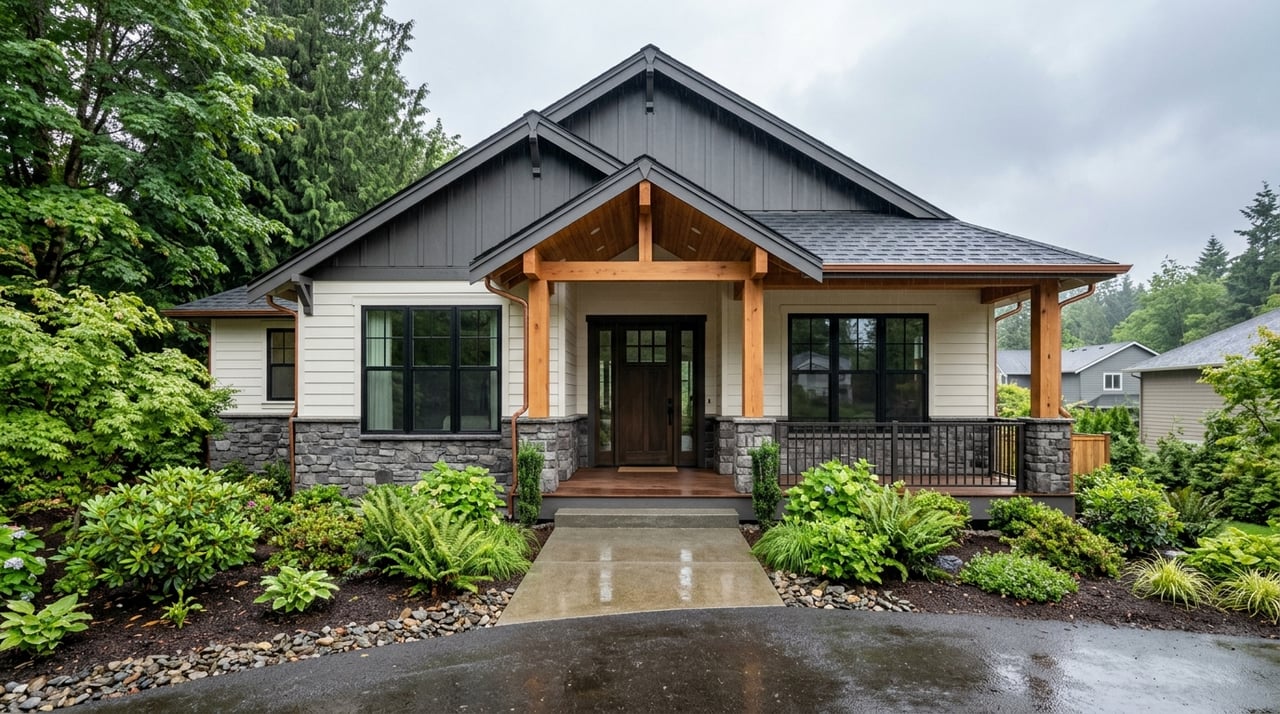
Is Camas Washington A Good Fit For Your Portland Commute?
May 14, 2026
May 14, 2026
Wondering if you can enjoy Camas living and keep a workable Portland commute? You are not alone. Many buyers looking in 98607 want a home base that feels more community-centered, but they also need honest expectations about drive times, congestion, and daily flexibility. This guide will help you weigh the real trade-offs so you can decide whether Camas fits your work routine and your lifestyle. Let’s dive in.
For many commuters, Camas can be a practical choice, but it is not the kind of location where every morning feels perfectly predictable. If your job takes you into Portland, your drive will usually depend on a corridor-based route that starts on SR 14, then moves toward I-205 and the Glenn Jackson Bridge before continuing into Oregon.
That matters because your commute is shaped by a few major corridors rather than a wide menu of alternate options. When traffic flows well, the route can feel straightforward. When congestion, maintenance, or bridge slowdowns show up, your timing can tighten quickly.
If you live in Camas and drive west, SR 14 is the main path out. WSDOT identifies the stretch between Camas and the I-5 interchange as a major freight corridor, which helps explain why this route carries a lot of regional movement beyond everyday commuters.
In simple terms, you are sharing the road with both commute traffic and heavy freight activity. That does not make the commute unworkable, but it does mean this route is important, busy, and sensitive to delays.
For many Portland-bound drivers, I-205 is the next key piece of the trip. WSDOT identifies I-205 from the Glenn Jackson Bridge to the I-5 interchange as a major regional corridor, making it one of the main ways people cross the Columbia River in this part of the metro area.
If your destination is on the east side of Portland or somewhere that connects well from I-205, Camas may feel more logical than it does for someone who needs a daily trip deeper into other parts of Portland. Your experience often comes down to where in Portland you work, not just whether you work in Portland at all.
WSDOT’s 2023 data show the morning trip from Camas to I-205 averaged 10 minutes. That is a useful baseline because it shows the first leg of the drive is often manageable under normal conditions.
Even better, that average was still three minutes below WSDOT’s reliable travel time for the route. So on many mornings, getting from Camas to the I-205 connection is not the hardest part of the trip.
The challenge is consistency. At 7:45 a.m., WSDOT reports speeds on that Camas-to-I-205 trip fell below 36 mph on 29.4% of weekdays in 2023.
That number tells you something important: the route works, but it does not perform the same way every day. If you need a tight arrival window every single morning, that variability deserves your attention.
The Portland commute does not stop at I-205. WSDOT reports the I-205 segment between the I-5 interchange and the Glenn Jackson Bridge averaged 14 minutes in 2023.
That bridge-adjacent portion is a meaningful part of the overall trip. If traffic is stacking up there, the drive can feel longer than the simple map distance suggests.
WSDOT also reports that the southbound I-5 segment from I-205 to the Interstate Bridge averaged 14 minutes in 2023. At 6:40 a.m., speeds on that segment were below 36 mph on 84.2% of weekdays.
That does not mean every Camas commuter uses that exact segment, but it does show how quickly regional choke points can affect travel in the broader Vancouver-to-Portland system. If your work location pushes you toward those bottlenecks, your daily routine may feel less forgiving.
The return trip matters just as much as the morning drive. WSDOT reports the evening trip from the I-205 interchange to Camas averaged 8 minutes in 2023, which suggests the final leg home is often fairly short once you clear the larger regional traffic pattern.
Still, evening congestion is not nonexistent. WSDOT found that speeds from the Glenn Jackson Bridge to the SR 500 interchange were below 36 mph on 10.5% of weekdays at 5:20 p.m. in 2023.
In other words, your trip home may ease up once you get back toward Camas, but the bridge area can still slow things down at common commute times.
Averages can sound reassuring, but reliable planning is what matters most when you commute often. WSDOT defines reliable peak commute time as the amount of time needed to arrive on time 19 out of 20 days.
That is a helpful standard because it reflects real life better than a best-case drive. Camas can absolutely work for Portland commuters, but it tends to be a better fit if you can allow some buffer in your schedule.
If you work from home part of the week or have some flexibility around start times, Camas becomes more attractive. The commute data suggest the route is manageable, but not perfectly predictable, which is often easier to handle on a hybrid schedule.
That flexibility can turn a frustrating daily routine into a reasonable trade-off. You still get access to Portland job centers, but you are not relying on a rigid corridor every single weekday at the same peak hour.
Camas stands out for buyers who want more than just a commute calculation. The city reports 14 parks, more than 22 miles of trails, and nearly 1,250 acres of parkland and open space, along with facilities that include playgrounds, picnic areas, boating access, and water access points.
For many buyers, that local lifestyle is the whole point. If you want a home base with outdoor access and a strong sense of place, Camas offers a lot to come home to.
If you are moving from out of the area, Camas can make sense when you want Southwest Washington living with a realistic path into Portland. It gives you a community-centered setting while still keeping you connected to the larger metro area.
The key is to be honest about your daily routine. If you know your work schedule, destination, and tolerance for peak-hour variation, you can judge Camas much more clearly.
Camas may be less ideal if you need the most reliable daily Portland commute possible and have very little room for delay. Bridge conditions, congestion patterns, and corridor-based travel can all create timing issues that are hard to avoid.
It may also be less appealing if you strongly prefer a transit-first routine. C-TRAN provides local service in Clark County, regional and express service to Portland, and The Current on-demand service in Camas and Washougal, but a Camas-to-Portland transit trip will usually require a transfer within the larger network.
WSDOT’s 2023 data also show very low bus share on SR 14 at I-205 during the morning commute. That suggests most people on this corridor still rely on driving.
One current detail worth knowing is the SR 14 West Camas Slough Bridge. WSDOT says the bridge now has reduced speeds, and summer 2026 repairs are scheduled to require up to two overnight weekend closures with signed detours.
This is a good reminder that commute quality is not just about average traffic. Ongoing road conditions and maintenance can shape your experience week to week, especially when your route depends heavily on one main corridor.
Camas offers a strong lifestyle package for people who want nearby recreation. The city’s shoreline master program covers 946 acres across 26 miles of shorelines along Lacamas Creek, Fallen Leaf Lake, Lacamas Lake, Round Lake, and the Columbia and Washougal rivers.
That means your weekends can look very different from your weekdays. For some buyers, access to lakes, trails, parks, and water is worth accepting a commute that needs a little more planning.
Downtown Camas is another big draw. The Downtown Camas Association describes it as tree-lined, historic, and filled with a revitalized mix of shopping, dining, art galleries, and services.
If you want a place that feels rooted and walkable in its core, Camas offers a different daily experience than a more purely commuter-focused suburb. That local character is often a major part of the decision.
Camas can be a good fit for your Portland commute if you value lifestyle, can tolerate some peak-hour variability, and do not need the most rigidly predictable drive in the region. The route is workable, especially for hybrid workers and buyers who prioritize parks, outdoor access, and a community-centered home base.
If you are weighing Camas against other Southwest Washington options, the smartest next step is to compare your likely drive route with the kind of day-to-day lifestyle you want. If you want help thinking through Camas, Vancouver, Battle Ground, or other nearby communities, Sarah Roth can help you narrow down the right fit with clear, practical guidance.
Stay up to date on the latest real estate trends.
I am committed to guiding you every step of the way—whether you're buying a home, selling a property, or securing a mortgage. Whatever your needs, I've got you covered.