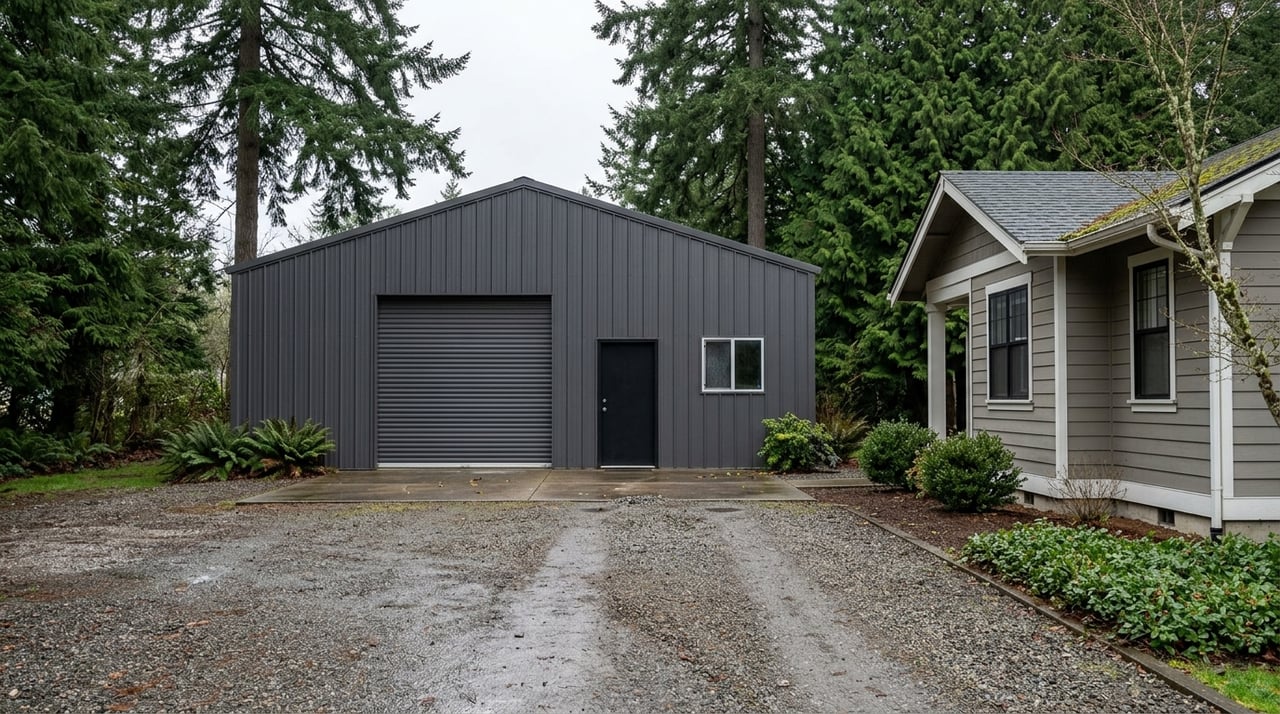
Buying a Land and Shop Home in Amboy WA
April 2, 2026
April 2, 2026
If you are dreaming about room to spread out, a place to park equipment, or a shop big enough for hobbies and projects, Amboy can be a compelling place to look. Buying a home with land and a shop in this part of Clark County can give you flexibility, but it also comes with a different set of questions than a typical in-town purchase. In this guide, you will learn what to look for, what to verify before you write an offer, and how to think through rural property ownership in Amboy. Let’s dive in.
Amboy is considered a rural center in Clark County. According to Clark County’s rural centers policies, rural centers are small-lot nodes surrounded by rural land used for agriculture, forestry, large-lot residential development, recreation, and environmental protection.
That matters because the lifestyle you are buying is often different from what you would expect in a fully urban area. Rural centers are not planned with a full urban level of services, so homes in and around Amboy may rely on a mix of public utilities and private systems depending on the specific property.
In Amboy, this type of property can look very different from one listing to the next. One home may have a detached shop and county road frontage, while another may sit on a larger parcel with a long gravel drive, private well, septic system, and multiple outbuildings.
Clark County’s residential permit categories specifically reference detached garages, shops, carports, guest houses, patio covers, and decks. That means shops and accessory buildings are common enough to be part of the normal permitting framework, but you still need to verify what was actually approved on the property you want to buy.
When you buy acreage, it is easy to focus on the house and the shop and assume you can decide the rest later. In Amboy, zoning can shape what future changes may or may not be possible.
Clark County’s Title 40 unified development code governs property development in unincorporated areas. Acreage buyers may run into forest and agriculture districts, rural districts, and rural-center residential or commercial categories, so it is important to confirm the exact zoning before assuming you can expand a shop, add another structure, or change how the land is used.
This is one of the biggest rural-property issues buyers overlook. Just because a parcel shows up on tax records does not automatically mean it is a legal building lot for permit purposes.
Clark County explains on its legal lot determination page that most parcels are legal lots, but older or unusual parcels may require a legal lot determination and sales-history review before permits can be issued. If you are hoping for future build potential, this step can be especially important.
A great shop can be a major reason you fall in love with a property. Still, you want to know whether the building was properly permitted and whether any converted areas match county records.
Clark County states that building permits are required by state law and create a permanent record of the work performed. Future owners, lenders, and insurers often rely on that record, so pulling permit history for the home, shop, barn, and any finished spaces is a smart part of due diligence.
If the listing mentions a shop, detached garage, or accessory building, ask for documentation early. A building that looks useful on day one can become a headache later if there is no permit record or if the current setup does not match approved plans.
That does not automatically mean the deal is off. It does mean you should understand the risk and what additional investigation may be needed before moving forward.
One of the biggest differences between buying in a rural area and buying in town is utility setup. In Amboy, you cannot assume every home has the same service pattern.
Clark Public Utilities says it provides electric service throughout Clark County and includes Amboy in its water service area. At the same time, Clark County Public Health notes that 24% of Clark County residents get water from individual wells, so a property may have public utility access, a private well, or a mix depending on location and infrastructure.
If the property uses a private well, ask for:
The Washington State Department of Health recommends annual testing for coliform and nitrate for private wells. Clark County also notes that new and replacement wells must be tested for coliform bacteria, arsenic, and nitrate, and county health may require a WAVE evaluation before building permits are issued.
Outside rural centers, Clark County says rural areas generally use individual on-site septic systems unless public sewer is available. Even within rural-center areas, the setup can vary, so septic questions should be part of your standard review.
Before you buy, ask for the current Report of System Status and septic inspection information. Clark County says that report should be on file before a home is listed for sale, and it is current if completed within one year of the sale date.
A beautiful property can lose some shine if access is unclear. In rural areas, you want to know exactly how you get to the property, who maintains the road, and whether there are recorded agreements in place.
Clark County’s road access guidance says a lot must have access to a county or state road. If access is from a private road, there should be maintenance documentation because the county does not improve or maintain private roads.
If the home sits at the end of a long gravel drive, budget for maintenance. If roadside vegetation is thick, keep in mind that Clark County Public Works says trimming roadside vegetation helps with drainage and winter road maintenance, especially during snow and ice.
That may sound small during a summer showing, but it can become part of your regular ownership costs. It is better to think about it now than be surprised later.
Owning land in Amboy can be rewarding, but it usually comes with more hands-on responsibility than a typical suburban lot. Instead of expecting city-style systems, you should plan for regular maintenance of wells, septic, drainage, and access roads when those systems are part of the property.
If the parcel includes a private stormwater facility, Clark County says private stormwater facilities remain the owner’s responsibility and may be inspected by the county. Keeping records organized can make future maintenance, resale, and permit work much smoother.
Properties with trees, outbuildings, or open land need a little extra attention to fire safety. The Washington Department of Natural Resources recommends defensible space around structures as a key protection step.
Clark County also requires permits for certain yard-debris and land-clearing burns where burning is allowed, and burn barrels are illegal. Amboy is served by Clark County Fire District 10, which staffs crews in Amboy, but prevention and site planning still matter on rural properties.
When you buy in a rural area, you are often buying into a working landscape as well. Washington law requires a disclosure notice that a property may be near a farm or working forest, and that customary agricultural or forest practices are protected under the state’s right-to-farm framework.
That does not mean every nearby parcel is actively used the same way. It does mean you should go in with clear expectations about the broader rural setting around Amboy.
Before writing an offer on a home with land and a shop, make sure you verify the basics that can affect both your use of the property and your future resale.
Acreage purchases often involve more moving parts than a standard residential sale. You may need to coordinate county records, utility questions, septic documents, permit history, and access details all at once.
That is where organized, local guidance can make a real difference. If you are considering buying in Amboy or another rural area in Southwest Washington, working with someone who can help you ask the right questions early can save time, stress, and expensive surprises later.
When you are ready to talk through your goals, next steps, or a specific property, reach out to Sarah Roth for practical, local guidance.
Stay up to date on the latest real estate trends.
I am committed to guiding you every step of the way—whether you're buying a home, selling a property, or securing a mortgage. Whatever your needs, I've got you covered.